February 6–8, 2026

• In-person at the Center for Brain Training, Jupiter, FL

550 Heritage Drive, Suite 140
Jupiter FL, 33458.

Discover How to Train the Brain for Better Focus, Calm, and Resilience

Whether you’re a health professional exploring neurofeedback for your practice or an individual curious about improving brain function, this 3-day immersive course will give you a deep, practical understanding of how neurofeedback works — and how it can transform lives.

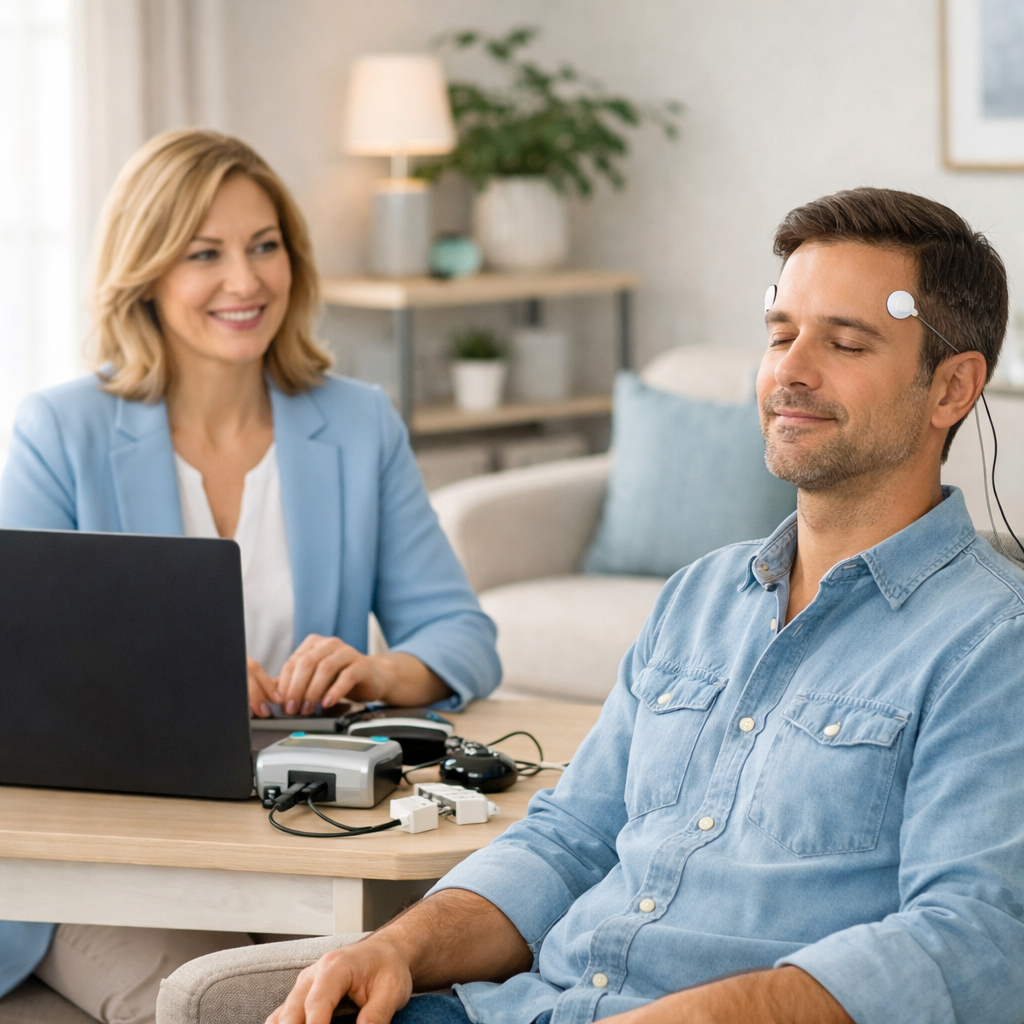
Experience neurofeedback firsthand through five personalized training sessions and guided demonstrations that show what happens when you teach the brain to regulate itself.

What Makes This Course Different

🔵  Concierge-Style Learning: Small group size ensures personal guidance and hands-on experience.

 🔵  Learn by Doing: You’ll participate in actual neurofeedback sessions and observe others in real time.

 🔵  Expert Instruction: Led by Mike Cohen, one of the most respected neurofeedback educators in the field.

 🔵  Practical & Applicable: Gain confidence understanding brain training for issues such as anxiety, ADHD, insomnia, depression and mood.

 🔵  No Prior Experience Needed: Perfect for professionals new to neurofeedback — or anyone simply curious about how it works.


Course curriculum

    1. Course overview

      FREE PREVIEW
    1. Welcome Letter

    1. Neurofeedback 101 Course Manual

    1. Hotel Suggestions

    1. Reading List Suggestion

About this course

  • $1,495.00
  • Center for Brain, Jupiter FL.

What You’ll Learn

  • The core concepts of neurofeedback and how brain training improves attention, mood, sleep, and anxiety.

  • How to create, adjust, and adapt training protocols using technology and observation.

  • Proper electrode placement, understanding frequencies and amplitude, and interpreting basic EEG patterns.

  • The difference between neurofeedback systems and approaches — what matters and what doesn’t.

  • Environmental, dietary, and lifestyle factors that influence outcomes.

  • How to explain neurofeedback to clients clearly and effectively.

  • Brain arousal states and their training implications

  • The business side of neurofeedback: pricing, billing, and integrating it into a practice.

  • Clinical discussions of conditions impacted by neuroregulation, including anxiety, PTSD, ADHD, depression, autism, tics, sleep issues, concussion recovery, and more.

Experience Multiple Neurotechnologies

These add-on tools help you understand how different technologies support neuroregulation and complement neurofeedback.

  • Photobiomodulation (red light therapy)

  • Audio-Visual Entrainment (AVE)

  • Cranial Electrical Stimulation (CES)

    elec

  • Bioregulation Therapy (BRT)

Who Should Attend

Professionals:

  • Mental health and healthcare professionals

  • Physicians and medical providers

  • Coaches, educators, and wellness practitioners

Non-Professionals:

  • Individuals interested in neurofeedback for personal growth or family use

  • Caregivers exploring at-home neurofeedback options

No prior experience is required — just curiosity and a desire to understand how the brain works and how to support its natural ability to self-regulate.

Instructor

Michael Cohen

Director

A passionate educator and mentor, he's the author of the groundbreaking book Neurofeedback 101: Rewiring the Brain for Anxiety, ADHD, Depression & Beyond (without medication). He's a thought leader in the field. Since 1996 Mike has been researching the brain, neurofeedback, biofeedback, neuro-regulation and human behavior across multiple disciplines. He integrates his near-encyclopedic knowledge into a powerful and unique approach to helping those who struggle with brain issues. He's helped thousands of adults and children, while also teaching courses and mentoring health professionals learning about neurofeedback.

Testimonials

“I really enjoyed the course. I particularly valued being able to work with the equipment and to experience applying and receiving the neurofeedback firsthand. Mike was awesome. He was a good teacher, really patient, humorous, approachable and really knows his stuff. Even with all his knowledge, he was able to appropriately simplify the information for the class. Being able to see the Center gave me a good idea on how to set up a clinic as well. I found everyone professional and welcoming. It was very positive.”

J. S., M.S. PhD Clinical Psychology Student
“Mike is a very engaging instructor. I learned so much from him. His teaching style is lighthearted but very informative. He’s good at helping people understand complicated topics. Since taking the course I’m much more comfortable doing neurofeedback.”

Karen Flannery, M.D., Hospitalist West Palm Beach, Florida

“This course was incredibly well-done. Mike is an unbelievable educator. He started with general information and built a framework around it, then filled in the details. It was brilliant. It was practical and hands-on. He gave enough information so that if people were intending to have a practice, they could go forth and use it. It was absolutely great!”

JM, Stuart, FL

“I learned more in the first day than in four days of another course I took.”

AL, West Palm, Florida

“The tenor of the class was casual, fun, and easy to listen to. I just wanted to soak up every little drop of information the whole time. Now I have all these great ideas spinning around in my head – all these basic but important changes in the way I think and talk about neurofeedback. You really have had a significant impact on the direction of my practice and my career! Thank you so much!”

K. S., D.C. Middleburgh, New York

Take the First Step Toward Mastering Neurofeedback

Small class size, expert guidance, and hands-on training designed for real understanding.

FAQ

  • Do I need prior neurofeedback experience?

    No. This course is built for complete beginners as well as practitioners exploring neurofeedback for the first time.

  • What neurofeedback and biofeedback systems will I train with?

    You’ll experience multiple forms of neurofeedback, biofeedback, and neurostimulation technology through live demos and supervised sessions.

  • Is equipment required?

    No. All materials and equipment are provided during the course.

  • Is this course focused on a specific brand of equipment?

    No. The training is 100% equipment-agnostic. The goal is to understand the principles, similarities, and differences across systems—without any sales pressure or bias.

  • Are CE credits or certifications offered?

    No. This course does not offer continuing education credits or BCIA certification. The focus is on real-world practical training and personal brain training experience.

  • Can I incorporate neurofeedback into a mental health or medical practice after this course?

    Yes. Many attendees use this course as their foundation before choosing equipment or pursuing advanced certifications. You’ll learn key business, clinical, intake, and implementation considerations.

  • Is this course heavily scientific or technical?

    It blends both. You’ll learn the science in a clear, human way, but also spend most of your time in hands-on experiential learning and real discussions about what works in the field.

Policies and Additional Information

Cancellations – a deposit of at least 50% of the full price is required at registration. Although the deposit or payment is non-refundable, a credit for the prepaid amount can be applied to a future course for up to one year, if the cancellation occurs at least 10 days prior to the event. Cancellations after this time will result in funds being non-refundable and they will not be transferred to a future course.

This course applies clinical concepts using neurofeedback. Neurofeedback has developed over more than a 30-year period. Neurofeedback 101 distills the basic practical principles for clinicians on how to apply neurofeedback training techniques to help clients with specific symptoms based on an understanding of brain function. The summary concepts about brain function come from many different sources including information on Brodmann areas. It’s an accumulation and summary of knowledge from a large group of health professionals, including PhD psychologists, neuropsychologists, neurophysiologists, psychiatrists, neurologists and more. Our instructor has helped teach APA certified courses for more than 20 years and has taught courses with much of this material included for the International American Psychiatric Association. During the course, we constantly stress the limitations of the data presented. We discuss the challenges that every brain is unique and can respond differently to the same training. We point out a variety of training models to deal with the same problems and discuss the challenges in identifying what problems actually exist when there are often no reliable biomarkers for most mental health and neurological conditions. A big part of the course discussion is about the limitations, pointing out that despite ongoing debates in the field about various models, differences in interpretation of clinical presentations, and differences in how to do neurofeedback training – that all these allow functional effects and have many years of clinical use by a large clinical provider population. We also warn that “effectiveness” of treatment is also not well defined and hard to compare but there are standards that can be used to help assess progress. The content of this presentation will include assessment measures that help assess brain function to be utilized in determining treatment interventions. When applied and used according to psychological ethics and practice guidelines, within the scope of expertise of the practicing psychologist, the methods taught do not pose any risks. The information presented reference peer reviewed research that addresses both the utility and limitations of the methods presented. Both the equipment discussed and the HBImed database are FDA cleared, but must be used by practitioners who have expertise in their use. We also discuss a range of equipment available to providers. We provide some explanation to providers about the current position of the FDA on the status of having FDA clearance for neurofeedback and EEG equipment and software.

Licensed professionals are responsible for reviewing the scope of their practice, including activities that are defined in laws as beyond the boundaries of practice in accordance with and in compliance with their professional standards. The manual and presentation slides produced for this course are proprietary and not for distribution without consent from Center for Brain.

This course is designed to teach the neurofeedback fundamentals and to help clinicians get started with neurofeedback.It’s an introductory course and is not designed to teach everything there is to know about neurofeedback. Neurofeedback involves and on-going learning process. Neurofeedback simply measures the EEG and provides feedback based on the individual’s EEG. Any perceived effects noted during the process of EEG training is likely the result of the individual’s brain responding to its own feedback. Please notify instructor of any unusual or undesirable responses to training. Effects are generally short in duration. Medications should not be stopped or altered without consulting your physician or psychiatrist. Other therapies should be continued until otherwise advised by your physician as well. Please notify instructor of any serious mental health or physical health conditions.